
Rules around personal storage and communal areas are much stricter than many people expect, mainly because of fire safety law and tenancy conditions.
Bottom line: no personal items are allowed in communal areas
Inside your flat = your storage
Outside your flat = shared safety space
Here’s a clear, practical breakdown of how Spitalfields Housing Association (SHA) residents should think about it, what may be allowed, and what counts as a violation.
1) The core principle
Across councils and housing associations, the baseline rule is simple:
- Communal areas are escape routes, not storage areas
- They must be kept clear at all times for safety and access
These areas include:
- Corridors, hallways, stairwells, landings
- Entrances/exits and fire escape routes
- Shared cupboards, bin rooms, balconies, walkways
Even if a space looks unused to you (e.g. under stairs or a quiet corner), it’s still treated as part of the escape route system.
2) Personal storage: what you should do instead
Residents are generally expected to:
- Store all personal belongings inside their own flat/home
- Use designated storage areas only (if provided and approved)
- Ask permission in writing if unsure about any shared space
Why? Because:
- Communal areas are legally the landlord (SHA’s) responsibility
- Your home is your responsibility (including fire risk)
3) What might be allowed (with written permission)
On rare occasions, some landlords operate a “managed use” approach, allowing low-risk items – but only under strict conditions, and with permission:
Typical examples:
- A small, non-slip doormat
- Plants in non-flammable pots
- Occasionally a bicycle (if it doesn’t block exits and is approved)
Conditions usually include:
- Must not reduce escape width (often minimum ~1 metre)
- Must not be flammable
- Must not obstruct movement or visibility
- Permission can be withdrawn at any time
Many SHA buildings operate a zero-tolerance policy – that means nothing is allowed to be stored in communal areas at any time.
4) Common violations
These are the most frequent breaches of items in communal areas:
Obstruction violations
- Leaving items in hallways, stairwells, exits
- Blocking fire doors or access points
- Even small items (shoes, mats, bikes) can count.
Fire risk violations
- Storing flammable materials (furniture, cardboard boxes, rubbish)
- Charging or storing e-bikes / e-scooters / batteries
- Keeping items in electrical or gas cupboards
- These are taken especially seriously due to fire risk.
Bulky / hazardous items
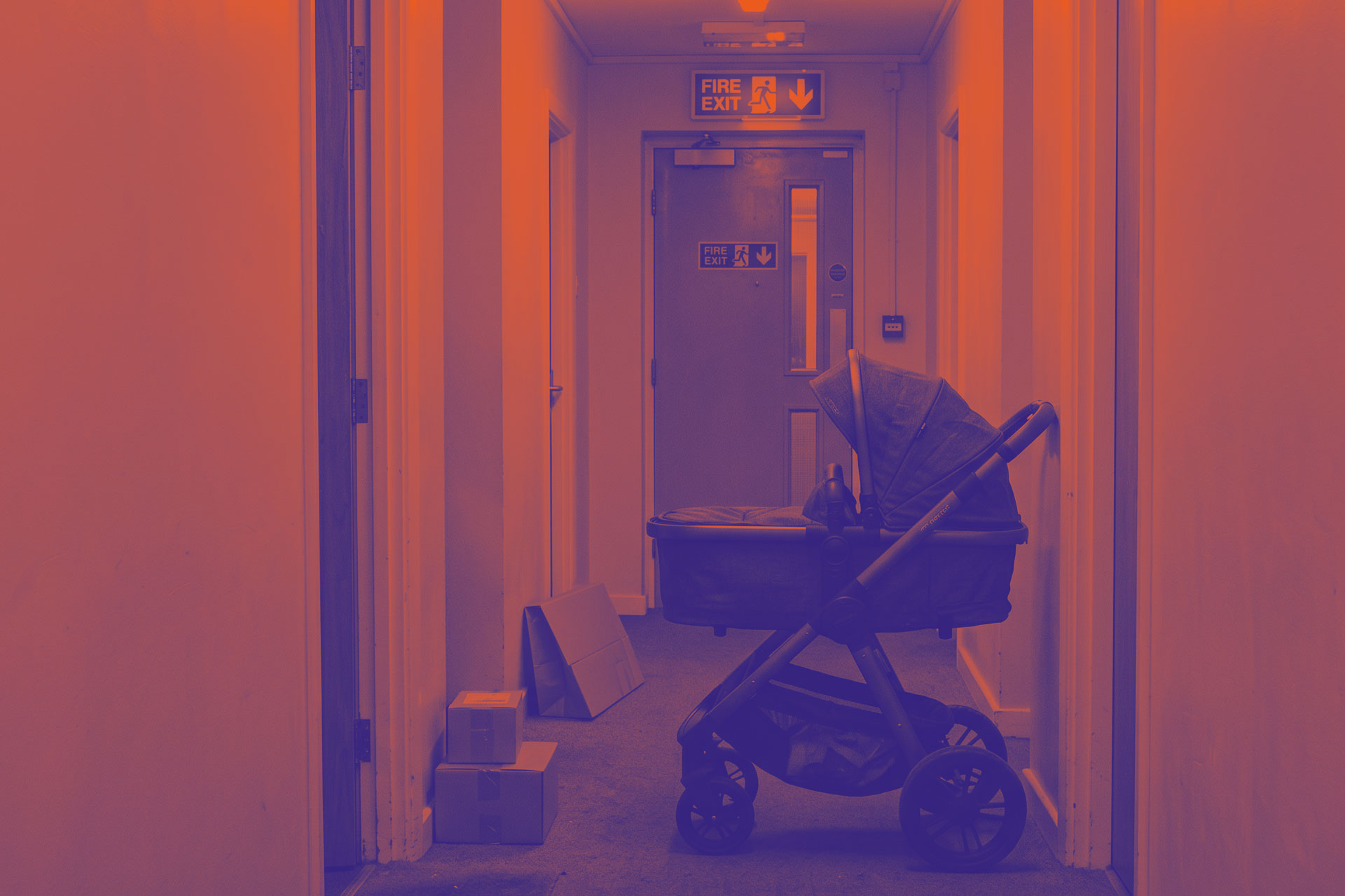
- Prams, pushchairs, mobility scooters
- White goods (fridges, washing machines)
- Large furniture or DIY equipment
- These can block escape routes and slow evacuation.
General clutter / misuse
- Using communal cupboards or spaces as personal storage
- Leaving rubbish or recycling outside designated areas
- Decorating communal areas without permission
- Even “tidy” storage is still a breach in most cases.
5) Why the rules are strict (post-Grenfell context)
After the Grenfell Tower fire, enforcement in the UK tightened significantly. Risks caused by stored items include:
- Blocking escape during evacuation
- Fuel or chemicals means faster spreading fires
- Trip hazards in smoke-filled conditions
- Hinders firefighters from accessing the building
6) What happens if you break the rules
Typical enforcement steps:
- Warning notice (sometimes labelled on the item)
- Short deadline (24 hours to 7 days) to retrieve goods
- Removal and disposal by the landlord included retrieval costs ranging from £75-£200
- Possible fine, charges or tenancy enforcement action: you could be charged up to £400 or higher for violations
SHA’s policy and practice is to remove items immediately.
It can also count as:
- Breach of tenancy agreement
- Potential legal action if repeated or dangerous
- Internal communal areas are covered by Public Spaces Protection Orders (PSPOs), and breaches may result in Fixed Penalty Notices (FPNs)
7) Practical advice for residents
If you’re trying to manage storage better:
- Assume nothing is allowed to be stored communal areas, unless written permission is granted
- Search for local storage solutions or companies
- Carry out a thorough declutter and clean of all items stored within your home
- Check your tenancy agreement or building policy
If you want something to be considered, ask for written permission, not verbal. Use:
- Your own indoor storage solutions
- External bike stores (if provided)
- Utilise the local council bulky waste services instead of leaving items out
If something in the communal area, blocks movement, could burn, or doesn’t belong to everyone, it’s very likely a violation of the rules, and must be reported immediately. Items removed cannot necessarily be returned, with charges applicable for retrieval.
If you have any questions on this topic, speak with an SHA officer, or you can email us at admin@spitalfieldsha.co.uk